| Please see the attached file : Marine Litter News (2014) Vol 5(2) from East Asia Civil Forum on Marine Litter
[출처] Marine Litter News (2014) Vol 5(2) from East Asia Civil Forum on Marine Litter (동아시아 바다공동체 오션) |작성자 통영이미정
|
Showing posts with label Marine Litter News. Show all posts
Showing posts with label Marine Litter News. Show all posts
Sunday, December 21, 2014
Marine Litter News (2014) Vol 5(2) from East Asia Civil Forum on Marine Litter

Monday, August 4, 2014
The biggest beach of Korea covered with marine debris blown by Typhoon on August 4, 2014
The biggest beach of Korea covered with marine debris blown by Typhoon on August 4, 2014
By Dr. Yong Chang Jang,
researcher at Korea Marine Litter Institute
yongchangjang@hotmail.com
Hae Un Dae Beach on Busan City is covered with about 150 tons of marine debris blown by Typhoon Nakri on August 4, 2014.
The beach is the most favorite in Korea. On some hot days, even 1 million people visit the beach on one day.
The marine debris covering the beach is special, as it is mostly composed of one type o f wooden board. Some newspaper reported that (1) this wooden board was released by the Typhoon by accident from a nearby coast, (2) this wooden board was originally on a ship, which was stranded in front of Busan in the last July, and the freight was moved to a coast and kept, but, (3) as the lost freight-wooden board-was not tightly bind, they were released by the Typhoon.
The case shows the importance of marine debris management again. The pictures below was taken on August 4 by Ms. Tae Hee Kim, a member of Korea Marine Litter Institute.
 <Fig 1. Marine debris covering Hae Un Dae Beach, Korea on August 4, 2014 (C) Tae Hee Kim>
 <Fig 1. Marine debris covering Hae Un Dae Beach, Korea on August 4, 2014 (C) Tae Hee Kim>
 <Fig 1. Marine debris covering Hae Un Dae Beach, Korea on August 4, 2014. Korean Coast Guard and Military is helping with cleaning them up. (C) Tae Hee Kim>
By Dr. Yong Chang Jang,
researcher at Korea Marine Litter Institute
yongchangjang@hotmail.com
Hae Un Dae Beach on Busan City is covered with about 150 tons of marine debris blown by Typhoon Nakri on August 4, 2014.
The beach is the most favorite in Korea. On some hot days, even 1 million people visit the beach on one day.
The marine debris covering the beach is special, as it is mostly composed of one type o f wooden board. Some newspaper reported that (1) this wooden board was released by the Typhoon by accident from a nearby coast, (2) this wooden board was originally on a ship, which was stranded in front of Busan in the last July, and the freight was moved to a coast and kept, but, (3) as the lost freight-wooden board-was not tightly bind, they were released by the Typhoon.
The case shows the importance of marine debris management again. The pictures below was taken on August 4 by Ms. Tae Hee Kim, a member of Korea Marine Litter Institute.
Sunday, July 27, 2014
Taiwan’s 2010 Report of International Coastal Cleanup (ICC)
Taiwan’s 2010 Report of International Coastal Cleanup (ICC)


Next is the debris from “Ocean/waterway Activities,” with 8,022 items and accounting for 18.7 %. Those included fishery equipments, nets, and buoys. Number three litter of the chart is from “Smoking-related Activities,” including cigarette filters and tobacco packaging. Final categories are “Dumping Activities” and “Medical/personal Hygiene,” accounting for 2.5% and 0.3%.
2010 International Coastal Cleanup in Taiwan had engaged 2,561 participants from 37 organizations. They completed 30 locations around the island. This was the year that Taiwan engaged the largest numbers of volunteers for ICC. The collected data had sent to The Ocean Conservancy for her annual report, which was issued in March this year.
ICC is one of the major ocean protection actions around the globe. In 2010, there were 610,000 volunteers from 114 countries to participate in this activity. In addition to remove the litter, data was collected for education purposes. By doing so, the public would increase the awareness and change daily habits to protect the ocean.
From the data collected, 30 cleanup activities during September and October of 2010, the
major trash of Taiwan coast is from “Shoreline & Recreational Activities.” 30,304 items were collected, accounting for 70 % of the total litter. It indicates that 70 % of debris was created by people’s activities along the shoreline. Or the trash was washed to the sewage systems then to the ocean by rain or wind because of failing to well manage the trash in the cities. Beverage bottles, disposable food containers, plastic bags, wrappers from various kinds of materials are all belong to this category. Next is the debris from “Ocean/waterway Activities,” with 8,022 items and accounting for 18.7 %. Those included fishery equipments, nets, and buoys. Number three litter of the chart is from “Smoking-related Activities,” including cigarette filters and tobacco packaging. Final categories are “Dumping Activities” and “Medical/personal Hygiene,” accounting for 2.5% and 0.3%.
Then what is the most commonly found trash along Taiwan coast? Plastic bags, not surprisingly. We collected 8,295 plastic bags along 12.68 kilometers coastline, which means we found one bag within 1.5 meters in average. Think about how many plastic bags we use in one single day, according the research:
The global usage of plastic bag is 1.2 trillions per year; in average one person uses 300 bags per year. More than 1 million of bags are used in one minute around the globe; the average use time for one single bag is 12 minutes.
Those disposable plastic bags seem convenient and cheap, but we forget the invisible pollution costs after throwing them away.
The second largest litter is glass bottles, accounting for 7,236. Those sharp glass pieces could easily hurt the beachgoers. Number three are the buoys for fishery, made of plastic and Styrofoam, and the total numbers of them are 6,054. Those top three items account for 50% of the total litter, showing the management importance of them.
Although lots of people make endeavors for ocean protection, the ocean pollution and harm by man-made litter are unimaginable. Marine litter is not from one single source, and not accumulated within a short period of time. ICC alone won’t solve the problem. Since the source is from human, change would only become possible by human’s reflection and awareness. So The Ocean Conservancy provides several suggestions to reduce the possibilities to pollute the ocean:
- Properly manage the litter you create. By doing so, the possibility of trash entering the ocean by wind or water will be decreased.
- Reduce, reuse, and recycle.
- Avoid buying things overly wrapped, in order not to create more litter.
- Cut the six-pack holders, so it won’t hurt the animals even they are falling into the ocean.
- Join coastal cleanup.
- Share the information of marine litter with your friends.
- Sponsor related plans and activities
- Properly manage the litter you create. By doing so, the possibility of trash entering the ocean by wind or water will be decreased.
- Reduce, reuse, and recycle.
- Avoid buying things overly wrapped, in order not to create more litter.
- Cut the six-pack holders, so it won’t hurt the animals even they are falling into the ocean.
- Join coastal cleanup.
- Share the information of marine litter with your friends.
- Sponsor related plans and activities
● Taiwan’s 2010 Top Ten Items of International Coastal Cleanup
1. Plastic Bags 8,285 (19.06%)
2. Beverage Bottles (Glass) 7,236 (16.65%)
3. Buoys/Floats 6,054 (13.93%)
4. Caps, Lids 4,283 (9.86%)
5. Beverage Bottles (Plastic) 3,190 (7.34%)
6. Cigarette Filters 2,679 (6.16%)
7. Toys 1,584 (3.64%)
8. Straws, Stirrers 1,566 (3.60%)
9. Clothing, Shoes 1,140 (2.62%)
10. Food Wrappers/Containers 1,123 (2.58%)
1. Plastic Bags 8,285 (19.06%)
2. Beverage Bottles (Glass) 7,236 (16.65%)
3. Buoys/Floats 6,054 (13.93%)
4. Caps, Lids 4,283 (9.86%)
5. Beverage Bottles (Plastic) 3,190 (7.34%)
6. Cigarette Filters 2,679 (6.16%)
7. Toys 1,584 (3.64%)
8. Straws, Stirrers 1,566 (3.60%)
9. Clothing, Shoes 1,140 (2.62%)
10. Food Wrappers/Containers 1,123 (2.58%)
Taiwan Ocean Cleanup Alliance (TOCA)
97057,No.87,Fuyang Rd., Hualien City, Hualien County, Taiwan
URL :http:// www.icctaiwan.org.tw
E-mail : kuroshio@seed.net.tw
TEL : +886-3-857-8148
FAX : +886-3-857-8948
97057,No.87,Fuyang Rd., Hualien City, Hualien County, Taiwan
URL :http:// www.icctaiwan.org.tw
E-mail : kuroshio@seed.net.tw
TEL : +886-3-857-8148
FAX : +886-3-857-8948
TOCA is a cooperative group of five Taiwan non-profit organizations that have devoted to solve the marine litter over a long-term basis, including Kuroshio Ocean Education Foundation, National Museum of Marine Science & Technology, Tainan Community University, Taiwan Environmental Information Association, and the Society of Wilderness. TOCA arouses the public awareness by education, appeal, and research. Its aim is to unite everyone’s effort to protect the ocean and start a sea change by making better policies, involving industries, and adjusting personal daily habits.
Tuesday, July 15, 2014
Public media, awareness raising and education outreach on Marine Litter (Green Fins Association)
Public media, awareness raising and education outreach on Marine Litter
(Green Fins Association)
Public media, awareness raising and education outreach on Marine Litter (Green Fins Association)
Green Fins Association still continues to establish the Marine Litter problem to the public and local community. The solution will not be easy and it takes a very long time to educate the local people, increase the public awareness and change people behavior. In 2009 Green Fins Association in cooperation with the Department of Marine and Coastal and Resources conducted a competition of 3 kinds of media 1) one minute short movie 2) poster and 3) T-shirt designed under the campaign “Beautiful Clean Beach without Plastic”. It was successful that we had substantial participants and we have made use of those works for different activities and occasions purposely to raise public awareness on marine debris.

This year we were granted fund from the government through the Office of Contemporary Art, Art and Culture Ministry to produce animation movie under the title “Gift from the Sea” which is about Marine Debris. The budget was just adequate for us to do the production in such a short period of time. There was no budget to publicize the movie on the television but enough to produce CDs. We also provided subtitle in English and will look for possibilities to have it translated into different languages in order to publicize it worldwide.

Our challenge is to find channels to publicize and introduce the campaign to encourage our people to stop taking from and littering into the Ocean. The animation movie “Gift from the Sea” contains 5 series: Me & the Sea, Beach Activities: Creative or Destructive, Marine Lives in Crisis, The Missing Chain and I love the Sea. Each episode is 5 minutes long. It presents the marine debris problem in order to stimulate people awareness, to take better care of the sea and to know how to tackle marine debris. The movie is aimed for the children and the young generation in order to embed sense of belonging and personal responsibility for their livelihood and the sea.

It emphasizes that we all have responsibility to solve this problem. “Gift from the Sea” also demonstrates the fishermen’s’ livelihood. The traditional Thai music used in this movie is to build conservation awareness, its meaning urges for urgent action to protect and preserve the sea. It also highlights marine debris problem and the impact to the economic, environment, culture and social aspect.
_sachfem.jpg)
The introduction of Marine Debris to the children aged 10-11 years old, we plan to train the school children to stop littering, start to separate the garbage, and form a local community to work on garbage management. What I am proposing is to educate the young generation to stop Marine Debris from where it is originated.
_sachfem.jpg)
We are addressing Marine Debris which mostly is believed from beach activities, so we will involve the locals who grow up, live & work by the seaside and depend on tourism for their livelihood as well as the tourist who are the outsiders. Surprisingly we found lots of household items such as combs, toothbrushes, toothpastes, liquid soap bottles, shampoo bottles, clothes hangers, clothes holder, measuring spoon for milk powder and detergent, shoes, as much as those items from tourists and beach activities.


The OC/ICC data card will be used as a tool to teach the target audiences on a simple method to identify where most of the marine debris comes from. They will learn and understand who pollutes their beach and how to eliminate the Marine Debris. The whole process will involve the target audiences combining the school children in Rawai District and their parents to form a group called “Natural Resources and Environmental Protection Volunteer (NEV) – Rawai District in Phuket. In the previous days, these people were local fisherman but now they earn their living from the tourism industry. At the end they all will find and design their ways to protect their own beaches from the irresponsible tourists.
• Phase I
Introducing the Land Based Litter and Marine Debris knowledge through activities
Cleaning up the beach, collecting data using OC/ICC data card, classifying top-ten found Marine Debris and identifying where they come from
Setting up separate garbage bins at schools
Introducing campaign on garbage separation through various medias
Establishing a club at school to work on awareness raising
Introducing the Land Based Litter and Marine Debris knowledge through activities
Cleaning up the beach, collecting data using OC/ICC data card, classifying top-ten found Marine Debris and identifying where they come from
Setting up separate garbage bins at schools
Introducing campaign on garbage separation through various medias
Establishing a club at school to work on awareness raising
• Phase II
Setting up the Garbage Collecting Center at school by NEV
Introducing campaign “exchange garbage” “running business”
• Phase III
Launching Reject and Reduce Plastic Campaign at school
Expanding Reject and Reduce Plastic Campaign to other schools and
communities
• Phase IV
Role model school established
Role model school established
One of many possible ways to educate people and raise their awareness on Marine Litter problem is through the exhibition. The recent International Coastal Cleanup Day which we organized on behalf of the Department of Marine and Coastal Resource, we were able to remove 3,502 caps & lids and 1,033 lighters from the 2 km long beach. This year, what we have done further than the previous years was to bring the recycle center to collect the garbage that can be recycled such as glasses, metal and caps & lids. Most of the marine litters cannot be recycled because they are filthy, torn apart and broken especially plastics. We thought of making art pieces and souvenirs from the collected garbage such as shoe (singular), lighter, broken glass, buoy, Styrofoam, etc and exhibit them at the museum as well as selling them at the museum’s souvenir shop.
With all the collection I have been saving and the newly removed from the recent cleanup activities will be used as materials for the designed art pieces. At the clean up & garbage separation activities we organize for the school children, we can encourage them to design and make art pieces from the garbage they collect. Their work will also be part of the exhibition. The exhibition will be exhibited from one museum to another or from one place to another. Each of the art pieces will have a poster or a postcard explaining about its origin, how it was used and how it ended up in our ocean for example the lighter. Further campaign addressing the issue will be directed to those who are directly relevant to the garbage such as cigarette producer and smoker. Another example, short nylon strings and Styrofoam usually found on the beach, we will explain how it was used, by whom and why such large volume were found everywhere on the beach.
Even though there are many projects going on addressing marine litter, the government has not paid enough attention to cope with this problem. We cannot wait but to keep sending the message through different media, educating children and raising public awareness.
by Kanyarat Kosavisutte (Green Fins Association)
Marine Litter Summit Tokyo Forum(2010. 11. 2~3)
Marine Litter Summit Tokyo Forum(2010. 11. 2~3)
JEAN hosts “Marine Litter Summit” every year since 2004. This forum is to share information, exchange opinions and have
discussions on the themes that are considered important to bring about to open discussions for the circumstances of the moment. At the forum, we meet together with the relevant national and local government officials to the matter, non-government and non-profit organizations, businesses and researchers who have concerns and responsibilities to address the issue.
discussions on the themes that are considered important to bring about to open discussions for the circumstances of the moment. At the forum, we meet together with the relevant national and local government officials to the matter, non-government and non-profit organizations, businesses and researchers who have concerns and responsibilities to address the issue.

2010 Marine Litter Summit was held in Tokyo on November 2 and 3. The theme of this year's forum was to see what measures are needed for promoting collection and disposal of marine litter, together with trash generation prevention, throughout Japan, in relation to the “Law for the Promotion of Marine Litter Disposal” enacted in 2009. This was required to have a complex conversation among the participants – what type of budget to be secured and what NGOs and NPOs can do to cooperate and work effectively to solve this problem. We aimed to shed light upon these matters through discussions during the two days forum.

“Law for the Promotion of Marine Litter Disposal”, by the way, comes short of some points, such as lacking stipulation to state draw up basic plans in Japan, apart from not dealing with the measures of disposing marine litter which drifts the ocean or deposited on the sea bed. We also began bringing out argument to articulate for a swift review of the law. JEAN will continue addressing those problems cooperating and working together with NGOs and NPOs of Japanese and neighboring countries.
by Japan Environmental Action Network (JEAN)
25th International Coastal Cleanup (by Ocean Conservancy)
25th International Coastal Cleanup (by Ocean Conservancy)

International Coastal Cleanup Poster (by Ocean Conservancy)
International Coastal Cleanup Poster (by Ocean Conservancy)


Data detective of International Coastal Cleanup (by Ocean Conservancy)
Data detective of International Coastal Cleanup (by Ocean Conservancy)


_sachfem.jpg)
Global partnership in 2010 International Coastal Cleanup (ICC) Conference
Global partnership in 2010 International Coastal Cleanup (ICC) Conference

The 16th Annual ICC Conference was held on a beautiful Caribbean beach in Cancun, Mexico, on April 28~May 1 2010. More than 40 coordinators from 20 countries and 14 US states got together for inspiring exchange of experiences and ideas on the ICC activities. Ms. Sunwook Hong and Suyeon Hong of OSEAN attended the conference as the Korean representatives.

The conference covered many important topics under the main theme ‘Power of Partnership’ in a very interesting way of communicating among participants to build a stronger relationship: interview with fellow coordinators, active discussions on partnerships/social media/policy/education, case-based fundraising strategies, and myth or reality of ‘Great Pacific Garbage Patch’, etc. In the introduction of his new ecothriller novel, Eye of the Whale, Mr. Douglas Abrams reawakened the participants on the wonder of nature and the deadly impacts of what humans have done to the ocean.
All coordinators shared key events and experiences in their ICC activities in 2009 on the partnership perspective. We informed the conference participants of the establishment of OSEAN and its strong relationship with JEAN, the Japanese coordinating organization of ICC.

We have gathered congratulatory video messages for the upcoming 10-year anniversary of the Korean ICC from the coordinators of India, Hong Kong, UK, Mexico, and the states of Pennsylvania and Virginia of USA, a national communications coordinator from Marine Debris Program of NOAA and the CEO of Ocean Conservancy. They heartily thanked and encouraged East Asian volunteers’ great efforts in taking care of our ocean we all share.
JEAN News and Schedule for 2010
JEAN News and Schedule for 2010
1. The New Law Regarding Marine Litter Disposal and its Effect to NGOs/NPOs
In Japan, as one of measures to marine litter problem, “Law for the promotion of marine litter disposal” has enacted on July 15, 2009. This was the result of efforts gathered from many parties concerned, including JEAN being enthusiastically lobbied for relevant government offices.
The law allocates budgets to prefecture governments from the established fund which enables local governments to start active projects for collection and related programs of marine litter on coasts of Japan. On the other hand, cooperation with and financial support for civic groups, which are stated in the law, have not yet realized. The official support, in monetary means, is definitely needed for citizen sectors, in order to solve this serious problem. In addition, the budget of the fund is limited for the three years from 2009 and the future continuation of financial support even to prefecture governments is uncertain.
2. Twentieth Year of ICC in Japan
International Coastal Cleanup (ICC) in Japan turns out to be the 20th year since it started in 1990 this year. JEAN will put our effort for recruiting new site captains and participants to full and expanded action to end the problem.
3. Taking Part of a Research Project with Academics
JEAN will take part of a research, working together with researchers of Ehime University and other institutes from this year. In the project, we are planning to operate “Science Café,” which is an enlightenment program for the problem of marine litter, and start sampling for chemical pollutant investigation.
4. Starting as a 'General Incorporated Association JEAN'
For the purpose of further substantiating our activity and strengthening networking effort for solving the problem of marine litter, JEAN has made a new start as a registered general incorporated association from this year, 2010. Our official
title in Japanese is the "General Incorporated Association JEAN", but in English, we simply appear as "Japan Environmental Action Network (JEAN)".
title in Japanese is the "General Incorporated Association JEAN", but in English, we simply appear as "Japan Environmental Action Network (JEAN)".
from JEAN
OSEAN-JEAN meeting held in Tongyeong, Korea
OSEAN-JEAN meeting held in Tongyeong, Korea
OSEAN and JEAN had a meeting on March 21~24, 2010 in Tongyeong, Gyeongnam Province, Korea. JEAN, with Ms. Azusa Kojima as the national ICC coordinator, has played significant roles in solving various marine debris issues in Japan over the last two decades. As a newly established NGO on October 9 2009, OSEAN has set the protection of our global marine environment with the help of science and citizens as its mission. Ms. Sunwook Hong, the representative director of OSEAN, has worked as the national ICC coordinator of Korea since 2002.
_oceanook.jpg)
We had three round table meetings to exchange and discuss this year’s activities and the outcomes of actions carried out in 2009 regarding the marine debris issues. We discussed how to operate the ‘East Asian Civil Forum on Marine Litter’, survey methodologies, national policies, and so on. We also had a chance to look at a volume reducer for derelict polystyrene fishing buoys.
_102_oceanook.jpg)
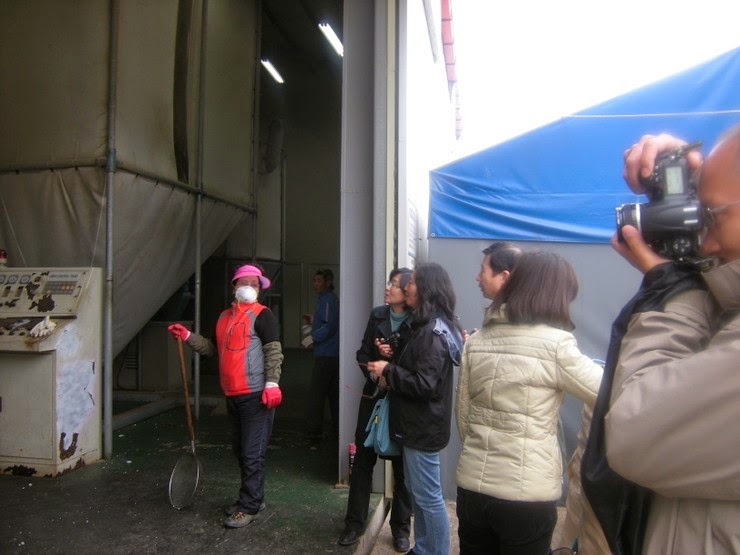
OSEAN and JEAN jointly organized a session in the Water Forum that was held to observe the World Water Day on March 23, 2010 in Changwon, Korea. Five speakers covered various topics on marine debris in the session titled ‘Marine debris activities as a civil participation of Integrated Coastal Management’: ‘Budget of Marine Litter in the Seto Inland Sea’ by Dr. Shigeru Fujieda (Kagoshima Univ., JEAN), ‘Multi-sectoral research on East China Sea beach litter based on oceanographic methodology and local knowledge’ by Dr. Satoque Seino (Kyushu Univ.), ‘Marine litter measure and citizen science’ by Ms. Azusa Kojima (JEAN), ‘Proposal of citizen’s survey on marine lives damaged by debris’ by Mr. Jongmyoung Lee, and ‘International Coastal Cleanup as a citizen science program’ by Ms. Sunwook Hong.
(osean)_oceanook.jpg)
(osean)_oceanook.jpg)
We delivered the seriousness of the marine debris problem to the participants of the session and had an opportunity to extend our network of interested individuals and organizations on the actions to address the marine debris issue.
Launching 'East Asian Civil Forum on Marine Litter'
Launching 'East Asian Civil Forum on Marine Litter'
East Asian countries are connected to each other environmentally, geographically, historically, or culturally through shared regional seas. The East Asian region is one of the most dynamic economic centers with some of the busiest shipping lanes in the world. With the spread of mass production and consumption over the last decades came the huge increase in solid waste generation. There are, however, not enough waste treatment facilities and management measures, which makes the region vulnerable to marine debris pollution.
Entering the seas in large amounts, floating debris has become a source of concerns and conflicts among some neighboring countries. This transboundary environmental problem requires concerted efforts of all the relevant stakeholders beyond sectoral and political boundaries. In this regard, OSEAN (Our Sea of East Asia Network) and JEAN (Japan Environmental Action Network), the marine debris NGOs in Korea and Japan, have shared a vision in which people in the East Asia could act together as one community in protecting our precious marine ecosystems. We believe that NGOs in the East Asian countries have an important role in sharing experiences and acting together to address the marine debris issue in the region from the bottom up.
The city governments of Shimonoseki and Nagato, and JEAN co-organized ‘2009 Marine Litter Summit - Shimonoseki•Nagato Meeting’ on October 16-18, 2009, in Shimonoseki, Japan. OSEAN suggested in the meeting to start an ‘East Asian Civil Forum on Marine Litter’ through which relevant NGOs and organizations in the East Asia could share experiences and information and work together on the marine debris problems. OSEAN and JEAN have reached a consensus to launch the forum and publish biannual newsletters. Now we launch the East Asian Civil Forum on Marine Litter with this newsletter that delivers marine debris related news from Korea and Japan via e-mail to people who are concerned with this problem on local, national, and regional levels. We hope that the forum could provide a venue for all of us to share our vision, experiences, and creative actions.
This is the first effort to link the East Asian people beyond geographical and language barriers to a common goal of protecting our seas from marine debris pollution. NGOs and organizations that have interests and passion to make our seas clean and healthy are more than welcome to join us. For more information, you can contact us at loveseakorea@empal.com. Please let us know if you have any problem in receiving the newsletter. This article is also available online at http://cafe.naver.com/osean.
All of OSEAN-JEAN
NOWPAP ICC & Workshop in Hirado

The 2010 NOWPAP International Coastal Cleanup and Workshop on Marine Litter Management was held on 26~27 March 2010 in Hirado, Nagasaki, Japan.
NOWPAP member countries (Korea, Japan, China, and Russia) have been taking turns to host the NOWPAP ICC & Workshop every year to promote the ICC activities in the region. This year’s main theme for the workshop was ‘Best Practices of Solid Waste Management’. Progress in ICC activities and implementation status of NOWPAP RAPMALI (Regional Action Plan for Marine Litter) in each country were also discussed.
A Chinese delegate reported the increase in ICC activities and a representative of Shanghai NGO has been recognized by Ocean Conservancy as the national coordinator of Chinese ICC. A Russian speaker presented that local ICC events in Russian Far East were becoming self-sustainable with support from an environmental business companies Korean and Japanese representatives introduced their own national policies to address the marine litter problem.

Mr. Jongmyoung Lee of OSEAN gave a presentation on ‘ICC Korea for 10 Years; Review and Perspective’.(Click)
Even though ICC of Korea started as a part of a governmental marine litter research project, NGOs have played a key role in organizing the national and local events. They are planning many kinds of activities, including NOWPAP ICC & Workshop, to celebrate the 10th anniversary of ICC Korea.
Even though ICC of Korea started as a part of a governmental marine litter research project, NGOs have played a key role in organizing the national and local events. They are planning many kinds of activities, including NOWPAP ICC & Workshop, to celebrate the 10th anniversary of ICC Korea.

Ms. Yoshiko Ohkura of JEAN talked about ‘20 Years of Carrying out ICC in Japan’.(Click)
JEAN has been acting as the national coordinator of ICC in Japan since 1990. Their efforts have much contributed to the raised awareness of people on the marine debris problem and the marine debris policy of Japan. Ms. Ohkura emphasized the need for behavioral changes on individual and societal levels to reduce the use of plastics.
JEAN has been acting as the national coordinator of ICC in Japan since 1990. Their efforts have much contributed to the raised awareness of people on the marine debris problem and the marine debris policy of Japan. Ms. Ohkura emphasized the need for behavioral changes on individual and societal levels to reduce the use of plastics.
Participants of the Workshop went out to clean up Tanoura beach with local people and recorded the amount and type of the litter on the ICC Cards.
20 Years of Carrying out International Coastal Cleanup in Japan
※ This script is provided by Yoshiko Ohkura who presented the same titled topic on behalf of JEAN in the 'NOWPAP marine litter workshop and ICC campaign in Hirado, Japan, March 26-28, 2010'.
20 Years of Carrying out International Coastal Cleanup in Japan
Introduction
Although most of the Northwestern Pacific Action Plan (NOWPAP) country participants already know about what is International Coastal Cleanup (ICC), there is a need to briefly explain it because it is a quite new activity for people in Hirado City, as there are no individuals or groups have participated in it by this time. By knowing the objectives and method of ICC, a clean-up activity that also involves survey on marine litter, JEAN anticipates that any individual and group in this city will join the action from this year.
What is ICC?
International Coastal Cleanup is originally started at a beach in Texas in 1986, when one of the member of Ocean Conservancy concerned about the situation of trash on the beach. In 1989 the neighboring countries, namely Canada and Mexico joined and it became the “International Coastal Cleanup”. In Japan in 1990, JEAN participated as one of five countries and became the “National Coordinator” of ICC in Japan. In that year, total 800 volunteers participated in the 80 cleanup sites. The site numbers have grown to around 200 with around 20,000 participants in the recent few years.
Aims and the Goal of ICC
The essential aim of the ICC activity is to build awareness in the society and make people understand the seriousness of the marine litter problem by having citizen volunteers participating in the cleanup and the trash survey. By being involved in the survey, especially, people first-handedly see the state of the problem and understand the marine litter is not just the products of beach-gores or fishing industry, but very closely related to our every day life activities. Therefore, the experience of ICC makes them think about why such and so many trash items of common use in our living are on beaches, then to actively involve in the action to reduce them.
All the materials found in the marine litter, plastic is especially problematic. It has been used because of its characteristics – light, durable and stable. On the other hand, the characteristics themselves are the cause of the problem; for its lightness, plastic trash can be blown away by wind and carried away by water easily; although plastic is durable compared to easily breakable glass, they will break down in a short period by strong sunlight and become small pieces, which makes us hard to collect; and even it broke down into pieces, it stays as plastic for a long time for its physical stability. Plastic is also known as the harmful chemical carrier. It is necessary to reduce marine litter, especially plastic trash.
Control and prevention are the important measures which ICC is appealing. By only carrying out the cleanup activity every now and then cannot solve the marine litter problem fundamentally. The trash continues to flow out to the ocean unless we rigidly control the production of trash in our society.
Prevention and control of marine litter also lead to conserve and maintain clean and healthy marine environment. Our Earth environment is not just for human beings but we share the environment with other creatures. ICC enables people to understand that controlling marine pollution leads to prevent threats to wildlife.
ICC is not just cleanup and enjoy the clean beach for the time being as a quick fix
International Coastal Cleanup not only cleans up coastal, water shores or underwater, but also carries out a survey on marine litter during the months of September and October. Many ICC events around the world are held on the third Saturday of September as Ocean Conservancy decided the day in the Coastal Week in the US.
ICC is a global and simultaneous campaign and the survey data gathered is therefore compatible to get the international results of the trash survey.
Characteristics of ICC
International Coastal Cleanup is held around the world, thus international; is simultaneously held on the third Saturday in September (can choose any day during the months of September and October); and investigating on the same trash items globally. As the data are compatible, we can compare the results of different countries. So far, over 100 countries and areas have participated.
ICC events are conducted mainly at water shores and underwater as well. It examines trash composition in order to know what are there and their quantity.
Figure 1. Countries and regions participated in 2008 ICC (Ocean Conservancy, 2009)
_oceanook.jpg)
ICC helps raising people’s awareness and concern as a part of environmental education. It is easy and first-hand action even small children can participate. The participation in the campaign means the immediate action for environmental conservation and the public can learn the state of marine litter and its cause from the survey. It is a tool for solving the problem of marine litter because it gives participants a chance to think about solution for the problem, and it can be a basis to propose solution measures to relevant bodies by indicating the compiled and stored data.
How to, why and in what way to Conduct the Trash Survey
The ICC trash survey by Japan Environmental Action Network (JEAN) is conducted in the following manner:
■ Collect trash on the beach, count and record number of the items on “Data Card”
■ JEAN adds trash items which constitutes characteristic features of Japanese marine debris
▷ Looking into materials by counting small pieces
▷ In order to make participants understand the trash travels over the sea and reaches to other
countries’ shores away from Japan, we counts foreign trash which might be drifted from
overseas countries
■ Decide the method of the survey according to topography, amount of trash, expected
participants number and duration planned
Figure 2. Data Card used in the ICC in Japan by JEAN (upper) and Original Data Card by Ocean Conservancy (lower)


Standardized Data Card
JEAN adds some original trash item particular to Japan to investigate in the data card used, but will be converted to ICC Data Card at the time of report to Ocean Conservancy.
Role of JEAN as the ICC coordinator in Japan
JEAN carries out ICC in Japan as the national coordinator since 1990 and has been taking a role of coordinating and networking local site captains who operate ICC in their local areas, compiling data gathered, publishing the results and distributing the annual report on campaigns in each year, and report Japan’s results to Ocean Conservancy. Primary roles of JEAN regarding ICC are as follows:
■ Carrying out the International Coastal Cleanup Campaign
▷ ICC Campaign notice
▷ Providing necessary materials (“Captain Manual”, Data Card, Poster, etc.)
▷ Listing Cleanup Sites by paper and on the homepage
▷ Data collection of marine debris and storing the data
▷ Reporting Japanese ICC results to Ocean Conservancy
▷ Disclosure of information and reporting annual activities (“Cleanup Campaign Report” and
JEAN Home Page)
■ Providing Know-how and support in various ways to “Site Captains (cleanup site organizers)”
■ Providing information, building up networks among various social sectors and approaching
relevant government offices and business/industrial sectors to solve the problem of marine litter
■ Carry out educational activities and corresponding to various inquiries
As well as those local cleanup site captains through out Japan, JEAN actively exchanges information and is working together with other ICC coordinators by means of having collaborating researches, introducing their activities to Japanese volunteers through our newsletter and the annual report, participating forums and workshops, etc. We also provide know-how of ICC to international organizations like NOWPAP as in this case.
Since JEAN consider cooperative partnerships with ICC coordinators in the neighboring countries are important and vital, we have been corresponding closely with ICC coordinators in Asia (Republic of Korea and Thailand) and the North Pacific rim (Philippines and Hawaii).
Addressing the problem of Marine Litter for 20 years – the Outcome
Surely the expansion and growth of ICC in Japan shows large development in these 20 years. Outcomes of the development have been, we believe, the increased awareness of seriousness of the issue in our society; changes of the government offices in some policies and actions--for example, model surveys of marine litter for national reduction policy, priority coasts cleanup program for measures for marine litter and the enactment of the “Law for the Promotion of Marine Litter Disposal”; and the growing tendency of international cooperation, including the rise in the level of recognition for the ICC activity and knowledge and information that JEAN possesses.
Principals for Solving Marine Litter Problem
From our experience through ICC activity, reduction and prevention of marine litter, which are the aims and objectives of ICC, can be realized by getting attention, concern and action from a large number of people, with analysis and accumulation of data collected through ICC trash survey. Then, with a greater number of people who got to know the state of present marine litter problem supported by the survey results, the trend in our society can be altered for its ways in dealing with plastics. In order to reduce marine litter dramatically, so that it will not give negative effect to marine environment, we need a careful planning on producing plastic commodity. When the public preferred to chose natural or biodegradable materials over petroleum made plastic commodity, it will be the first and important step toward marine litter free society. Once such a preference is made, people will purchase and use less plastic items and be careful when they dispose of such commodity.
Alter Our Society
To solve environmental problems, such as the marine litter problem, most of us know it is important and try aiming at such concepts: “Think globally and act locally”, “International cooperation” and “Cooperation and partnership among citizens, business sectors and governmental bodies". It seems, however, we are still struggling to reach the solution, even though it seems that we have successfully reached those levels of concepts. Despite of our effort to consider global matters by acting locally, developing international cooperation or building cooperative partnership amongst diverse social sectors, the fact is that we have not yet changed our preference and behavior to reduce the use of plastics.
'Alter our society and our behavior' truly means:
- To plan and make things that do not affect natural environment, i.e. not threaten wildlife and human life
- To try using such things longer and with care
- To avoid disposable goods
- Ultimately, not to use plastic or any other substances that last too long or damage the Earth environment
Prescription for such a society
For the marine litter free environment and the society that cares for environment, the following prescription should be subscribed and put into practice:
■ Citizens
▷ make effort not to use goods made of materials that harm natural environment, including our
life
▷ acquire knowledge and power to convey the message (results from ICC)
■ Governmental bodies
▷ make policy that decides not to use plastics
▷ information gathering, disclosure and a practical application of it
◆ Partnership with NPOs/NGOs and use of their know-how (with a consideration for the
cost value)
■ Business and industrial sectors
▷ production of goods with consideration with circulation of resources
◆ Strive for a shift from plastic to reusable and bio-gradable materials
▷ change in packaging and its material
▷ from recycle to reuse
The problem of marine litter, especially trash of commodity made of plastics, is as serious and important as issues of “global climate change” and “bio-diversity”. If we hoped to pass on trash free beaches and clean, healthy and affluent marine environment for future generation, we seriously consider the above prescription putting into practice.
ⓒ Yoshiko Ohkura/JEAN
International Liaison and Information Manager
Japan Environmental Action Network (JEAN)
HP URL <http://www.jean.jp/>
Email cleanup@jean.jp
Marine Debris Education Kit for Fishermen
Marine Debris Education Kit for Fishermen

An educational kit on marine debris for Korean fishermen, titled Endless Challenge to Clean Sea, was published on December 31, 2009, with a financial support from the Ministry of Land, Transport, and Maritime Affairs (MLTM) and the Korea Marine Environment Management Corporation (KOEM) (photo).
For the last 9 years, the International Coastal Cleanup campaigns in Korea have revealed that marine and waterway-related debris occupies much higher fraction in the total debris collected than the international average. This has led OSEAN to develop the kit to educate fishermen on the seriousness of marine debris problems and to show how they can participate in efforts to reduce them. Mr. Jongmyoung Lee and Ms. Sunwook Hong at OSEAN have coauthored the kit.
The primary target of the education kit is people who closely work with fishermen, such as local officials, coast guards, instructors in local educational institutions, members of fishery cooperatives, and others. The kit is composed of an instructor’s manual, booklets, a DVD, posters, and a briefcase. The instructor’s manual provides detailed scripts for educators and supplementary information, reference, and photos are also included in the DVD for in-depth education. It was designed to be used even in places where there are no electronic equipments such as beam projectors.
The first workshop was held to train potential educators in Jungdo, an island off the southwestern coast of Korea, on April 29-30, 2010. Mr. Lee introduced the kit to about 170 participants and explained how serious marine debris problem is, why fishermen education is needed, and how to use it. The kit received an enthusiastic response from the participants.
An educational kit on marine debris for Korean fishermen, titled Endless Challenge to Clean Sea, was published on December 31, 2009, with a financial support from the Ministry of Land, Transport, and Maritime Affairs (MLTM) and the Korea Marine Environment Management Corporation (KOEM) (photo).
For the last 9 years, the International Coastal Cleanup campaigns in Korea have revealed that marine and waterway-related debris occupies much higher fraction in the total debris collected than the international average. This has led OSEAN to develop the kit to educate fishermen on the seriousness of marine debris problems and to show how they can participate in efforts to reduce them. Mr. Jongmyoung Lee and Ms. Sunwook Hong at OSEAN have coauthored the kit.
The primary target of the education kit is people who closely work with fishermen, such as local officials, coast guards, instructors in local educational institutions, members of fishery cooperatives, and others. The kit is composed of an instructor’s manual, booklets, a DVD, posters, and a briefcase. The instructor’s manual provides detailed scripts for educators and supplementary information, reference, and photos are also included in the DVD for in-depth education. It was designed to be used even in places where there are no electronic equipments such as beam projectors.
The first workshop was held to train potential educators in Jungdo, an island off the southwestern coast of Korea, on April 29-30, 2010. Mr. Lee introduced the kit to about 170 participants and explained how serious marine debris problem is, why fishermen education is needed, and how to use it. The kit received an enthusiastic response from the participants.
ICC in Korea for 10 years: Review and Perspectives
| |||||
|
ICC Korea was started as a marine litter (ML) monitoring program of governmental research project. The first national coordinator was a researcher of Korea Maritime Institute who was in charge of ML monitoring by NGOs. Most of site captains were local leaders of that monitoring program. ICC had been partially supported by governmental research projects, which was helpful for organizing events and building partnership between government and NGOs. Thus we can say that ICC in Korea was born with research project of government.
Sunwook Hong got involved in that project as a researcher and became the ICC coordinator of Korea in 2002. But she moved to NGO and ICC Korea has been mainly organized by NGOs since 2004. And most of local events have been organized by local groups without financial support from government.
Sunwook Hong got involved in that project as a researcher and became the ICC coordinator of Korea in 2002. But she moved to NGO and ICC Korea has been mainly organized by NGOs since 2004. And most of local events have been organized by local groups without financial support from government.
Growth of ICC in Korea

Fig. 1 Number of People and site of ICC Korea (2001~2009)
Fig. 1 shows numbers of the people and site of ICC Korea for the last 9 years. At the very first year, ICC was limited to ML monitoring sites, 23 in number. Many volunteers were not good at filling data cards. Only 17 hundred people reported data cards although 25 hundreds of people actually participated. Participants had been continuously increasing to reach over 6 thousands in 2008. And Number of sites was over 60 last yaer. But typhoons and heavy rains cause decrease of participants in some cases.
In 2006, after five times of experiences, we got to know there were some unique items found in Korean coast, which were not included in ICC data card. So, we changed the data card to reflect the Korean status of marine litter. We added 10 abundant items to the original version of ICC card and required for site captains to record width as well as length of cleaned coast for standardization.
In 2006, after five times of experiences, we got to know there were some unique items found in Korean coast, which were not included in ICC data card. So, we changed the data card to reflect the Korean status of marine litter. We added 10 abundant items to the original version of ICC card and required for site captains to record width as well as length of cleaned coast for standardization.
Information from ICC Data
ICC data card is designed to find out the source of ML, thus it iscategorizing sources of ML as 6 kinds of activities. Fig. 2 is showing the major source of ML in Korea.

Fig. 2 Result of ICC Korea (2001~2009)
You can see that ‘Shoreline & Recreational Activities’ is the most important ML source. We can guess that about a half of ML in Korea are coming from land. ‘Ocean& Waterway Activities’ is shown as 20%~35%. However, the percentages of this category in global report of ICC are always around 5%. It means the rate of ML related to fishery and shipping activities in Korea is higher than that of world average by more than 4 times.
You can see that ‘Shoreline & Recreational Activities’ is the most important ML source. We can guess that about a half of ML in Korea are coming from land. ‘Ocean& Waterway Activities’ is shown as 20%~35%. However, the percentages of this category in global report of ICC are always around 5%. It means the rate of ML related to fishery and shipping activities in Korea is higher than that of world average by more than 4 times.
Top 10 in Korea (2001-2009)
_sachfem.jpg)
Most abundant Item found in ICC Korea for the last 9 years is Cigarettes (Table 1). It’s the same as the world ‘Top 10’ of ICC. Bouys/ Floats’ are ranked fifth. But usually we can not find this item in that of world result. In 390 thousands of litters which ICC participants of Korea recorded so far, Top 10 items account for 70%. Thus we should focus on controlling of those10 items. It can be an effective way to reduce ML in Korea.

Fig. 3 Change of abundant items in ICC Korea
Fig. 3 (a) is showing the increase of Cigarerrets and Cigarettes filters. But we don’t know whether Cigarettes are actually increasing in Korean coasts or participants are becoming to collect comparatively small items more than before. Bags are also increasing continuously since 2002 (Fig. 3 (b). However, Beverage cans (Fig. 3 (c)) and Beverage bottles (Fig. 3 (d) are decreasing. We guess that it’s an effect of reinforced recycling policy. Most of cans and bottles are collected and recycled by waste management system in Korea. We can see that waste management policy on land can influence the generation of ML on coast. But recycling rate of filmy materials - like plastic bags - is still low. It can be a partial explanation of increase of plastic bags on the beaches.
Outcomes
Experiences and data from ICC provided the basement of the protocol of ‘Korea National Marine Debris Monitoring Program’. We modified ICC card to the monitoring card of the government survey project. And we can compare the result of monitoring program and ICC data.
But the most important outcome of ICC is raising public awareness. More than 25 thousands of people participated in ICC and became to know what is making sea dirty. I believe that the awareness about cause of marine pollution can change behaviors of the people.
Last year, we developed ‘Marine litter education kit for fishermen’ with KOEM (Korea Marine Environment.
Management Corporation). I’ve already told you that we found out fishery related ML are significantly abundant in Korea. MLTM decided to put the priority on fishermen education and supported the development of the education kit. Main contents of the material are ‘damage of ML’, ‘major policy measures of the government’ and ‘guides to which fishermen easily accommodate’. It contains brochures, posters, presentaion file, video clip and manual for instructors. Almost everyone can give a lecture to fishermen with this education kit.
ICC Korea also has contributed international cooperation. ICC coordinators of Korea and Japan have been leading the cooperation between civil societies of both countries. And they also helped promotion of NOWPAP ICC campaign from Yamagata in 2006 to Hirado today. With ICC, civil organizations of East Asia are enhancing the network for reducing ML in the region.
ICC Korea also has contributed international cooperation. ICC coordinators of Korea and Japan have been leading the cooperation between civil societies of both countries. And they also helped promotion of NOWPAP ICC campaign from Yamagata in 2006 to Hirado today. With ICC, civil organizations of East Asia are enhancing the network for reducing ML in the region.
Perspectives
However, we have long way to go for ML free Sea of East Asia. For the development of ICC Korea, we need the enterprise participation and fund from diverse sources. And we have to develop effective pubic relation strategies including the media involvement. We need to develop roles of zone captains, who are in charge of organizing the ICC event around their own local regions. We also need active participation of land waste related organizations. And we have to use the ICC data more effectively for ML management policy.
Subscribe to:
Posts (Atom)